The Evolution of Baseball Uniforms
24th May 2024
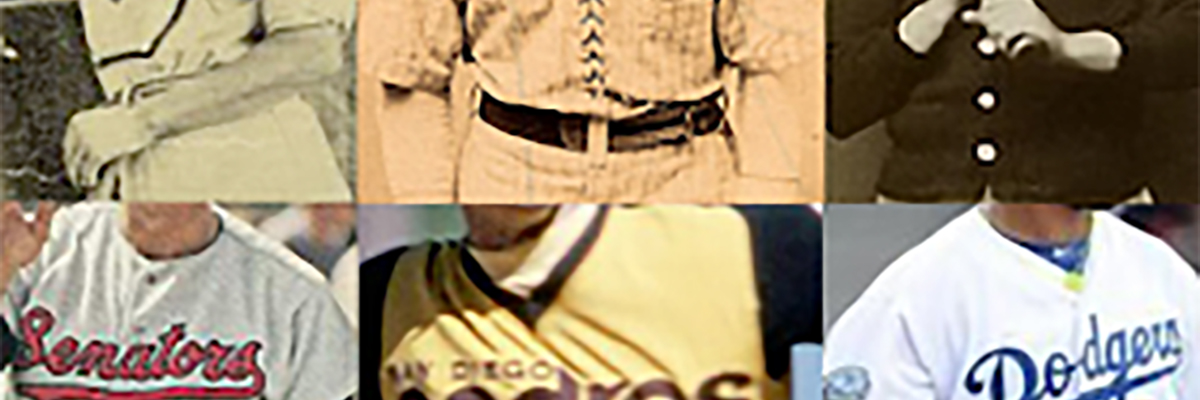
With hockey and basketball approaching the end of their respective seasons and football not kicking off until September, America’s collective sports focus will be on baseball. More than any pro sport, baseball uniforms don’t seem entirely intuitive. Why dress head to toe in polyester in the heat of summer? What are the weird socks? We wanted to take a closer look at how baseball uniforms have evolved over the years to help explain why baseball players dress the way they dress.
In the Beginning
Back in the mid-1800s, baseball players wore baggy pants, a plain shirt, and a straw hat. Once more teams became organized, they needed a way to distinguish between each other for the fans. Enter alternating uniforms for home and away teams as well as colors, logos, and patterns, such as pinstripes and checkerboards.
It’s Not Always Pants Weather
Just the thought of playing baseball in wool pants in the summer heat has us feeling faint. Teams back in the mid-1800s remedied this by introducing knickers that cuffed just below the knee to give players a more breathable uniform option.
Identity Lies in the Sock
During the same time as the introduction of cuffed knickers, stockings became popular for absorbing sweat. Teams started coloring the accessory to match their uniform and added unique stripe patterns to make it part of their team's identity. One early professional team was the first to popularize the fad. The practice has stuck, with modern teams across different cities utilizing patterns and colors that are instantly associated with team style.
Caps: More than Just Sun Blockers
Teams began experimenting with brimmed caps in the 1860s, with a range of styles including tall pillbox caps and the beginnings of the rounded, classic cap look that has endured to this day. Colors and logos started creeping into cap design until it became a staple of every team. Oddly enough, helmets were not mandated in professional baseball until 1971.
What’s in a Number?
At first, players didn’t wear numbers on the backs of their uniforms. Even some of the earliest stars of the sport didn’t have a number on the back of their uniform early on in their careers. When numbers were first introduced, they were used to signify the batting order of the player as well as to easily identify them on the field.
It wasn’t until the 1930s that numbers became required, and by the 1950s, additional numbers on the front of uniforms began appearing in professional baseball.
Modern Changes
In the last several decades, the biggest changes to uniforms have come from colors and fabrics, with the 1970s ushering in a bright splash of colors and the move towards a lightweight polyester. Since then, the biggest trend is the baggy, loose-fitting uniforms most players wear. What will be the uniform style in 10 or 20 years? We think high socks and stirrups will come back into style more than they already have, and players will start wearing more form-fitting uniforms. What do you think? Share with us in the comments below and enjoy your summer of baseball!